Why Our AI Presentation Tool Never Took Off
Almost exactly a year ago, my friend and I launched a product that aimed to make creating and editing slide presentations a seamless experience. We named it Sonic.
Our entire thesis was that anyone should be able to take the "presentation idea" in their head and see it on a slide, exactly as they picture it, pixel for pixel. While I still strongly believe that this should be the model for deck creation, I am writing this as my post-mortem analysis of an abandoned project.
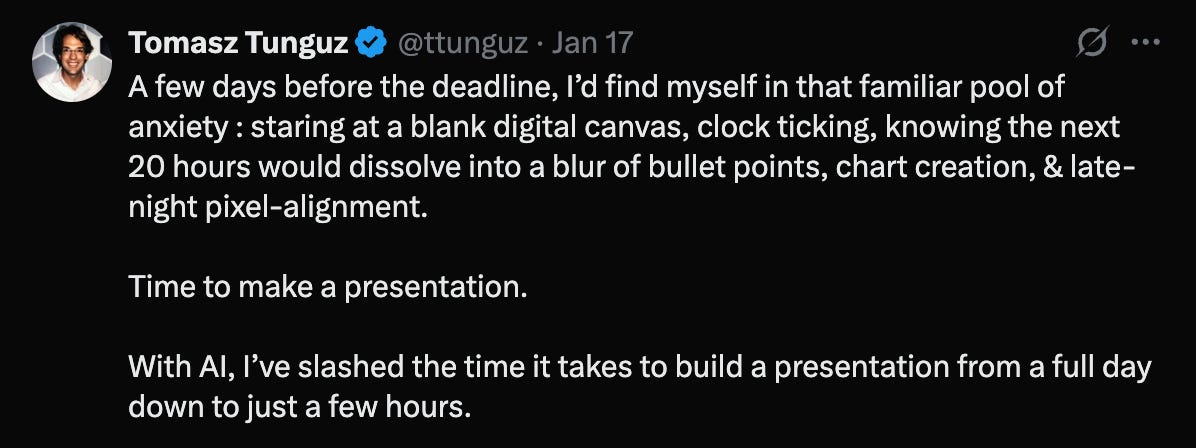
How It Started
My friend and I would discuss things we read and observe on a daily basis. We also shared the things we heard from people we know. We bounced back many ideas from developing training data for robotics, to creating food delivery run by drones (for cities with condos like downtown Toronto).
From friends, we heard the frustration of having to spend significant time "turning comments". In non-corporate terminology, this means going through the manager's comments that they left on a slide deck. This usually entails making very minor adjustments such as font, colour, alignment, grammar, etc. So we decided this would be the problem we tackled: helping our friends in investment banking and consulting save time with the tedious deck edits.
The Validation That Kept Us Going
As two software/AI engineers by trade, we wanted to further validate the problem by trying to speak to more individuals beyond our immediate circle. We set up a landing page with a couple sentences explaining our idea and a waitlist sign up field.
I made a few posts and left a couple comments on r/powerpoint and r/consulting to get a feel of common frustrations while soft shilling our idea. To our surprise, we got over 1,000 sign ups in a short amount of time. It was the signal we needed to begin building a product.
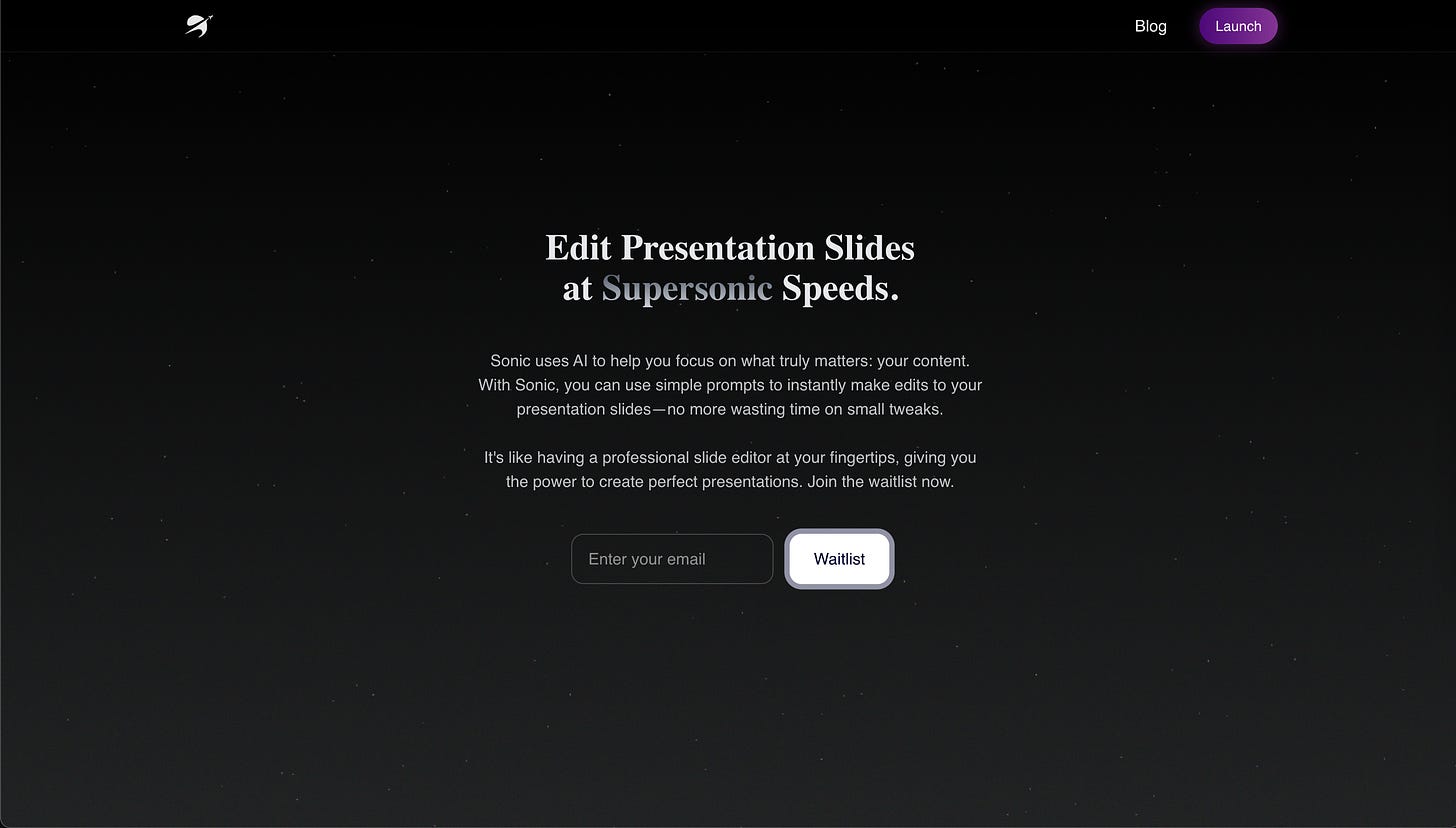
The waitlist that kept on giving.
What is It
Sonic is presentation platform that lets users describe what they want instead of manually designing. The idea was that the majority of the work could be done by speaking to an LLM. Here’s an elementary MVP video I was able to dig up:
Watch the video on the original post
Why It Failed
There are many reasons that contributed to the project exit; however, I think it can be boiled down to one thing: lack of adaptability.
This was my first (well, kind of second) real rodeo of trying to seriously commercialize a product and I think we were too strongly opinionated on targeting these bankers and consultants.
Two key restrictions with our target customer:
- There needed to be a PowerPoint integration
- Sonic needed 95%+ accuracy for it to be worthwhile
These two factors created a major technical barrier — PowerPoint files are written in their own language, called PresentationML, which made it very hard to make our own AI integration.
The reason why I say adaptability was our pitfall is because we weren't quick to move to the next idea. Instead of being bogged down by technical details, we needed to continuously speak to potential customers who might use this idea, or even different applications of this technology (generative visuals). For instance, bankers and consultants are not the only power users of presentation software. Additionally, many people give presentations with PDF exports, a much easier format to make presentations instead of being constrained by Microsoft's rules. I even had a friend tell me he used Sonic to help visualize his research.
A big contributor to the lack of adaptability was operating under our own (incorrect) assumptions, rather than creating an iterative loop with the customer.
Lessons Learned
While we didn't raise a $100T Series P with this idea, it still came with many lessons.
Interest: I need to be somewhat invested in the idea or mission. In the end, even with several paying customers, fixing bugs felt like such a chore. In an ideal world, I am my own customer.
Velocity: I need to refrain from making everything perfect and just ship core features as quickly as possible.
Adapt: adapt when things seem impossible, but stick to the north star mission if it’s something I truly believe in.
Assumptions: I need to stop operating under my own assumptions and engage with the customer at a much higher frequency. If I am not a customer, I need to truly understand the customer's problem by talking directly with them.
Current State
Thematically, I feel like my friend and I were on the right track with Sonic. AI-native presentations are inevitable, and I think we were in a good position at the time we started working on it. Fast forward to now, I have seen some promising startups like Chronicle raising a $7.5M seed round and Gamma reaching $50M in ARR.
Next
I am taking these lessons with me and exploring the next thing to work on. If you were one of the few people who used Sonic, thanks!
After the Sonic stint, I began dabbling in the healthcare space. I will write about my journey with this next venture in an upcoming post.
Feel free to reach out to me, I love chatting to new people. Also follow me on X to hear me run my mouth and sometimes share valuable insights.